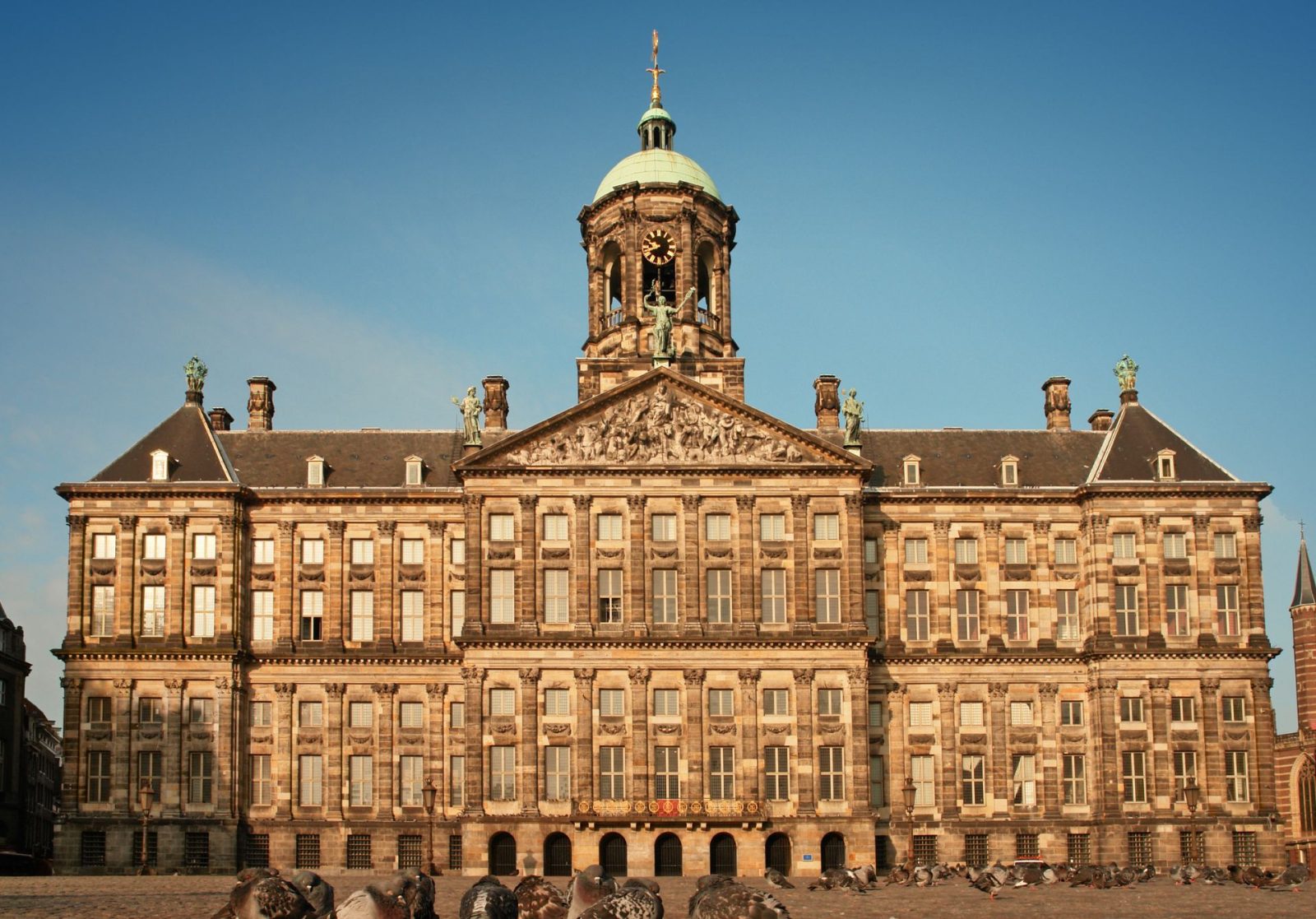
Royal Palace Amsterdam
Standing proudly on Dam Square in the heart of Amsterdam, the Royal Palace (Koninklijk Paleis) isn’t just another pretty building—it’s a living testament to the Dutch Golden Age and a working palace that still hosts state banquets and royal receptions today.
From City Hall to Crown Jewel
Here’s something most visitors don’t realize: the Royal Palace wasn’t originally built for royalty at all. Constructed between 1648 and 1665, this architectural masterpiece started its life as Amsterdam’s city hall during the city’s wealthiest and most powerful era. The building was designed by architect Jacob van Campen, who envisioned a structure that would showcase Amsterdam’s dominance as a trading powerhouse to the entire world.
The transformation to a royal palace happened in 1808 when Louis Napoleon, brother of the famous Napoleon Bonaparte, became King of Holland and decided he needed a suitably impressive residence. He literally moved in and converted the city hall into his palace, though his reign was short-lived. Today, it belongs to the Dutch state and is at King Willem-Alexander’s disposal for official functions.
Why Architecture Buffs Go Crazy for This Place
The Royal Palace sits on an astonishing 13,659 wooden piles driven deep into Amsterdam’s notoriously soft, marshy ground. This engineering marvel was necessary because, well, Amsterdam is essentially built on water. The building’s classical design draws heavily from ancient Roman architecture, which was all the rage during the Dutch Golden Age.
But here’s what really makes jaws drop: the sheer opulence inside. We’re talking about the largest and grandest classical interior in all of the Netherlands. The Citizen’s Hall (Burgerzaal) stretches an impressive 28 meters high and features intricate marble floor inlays depicting maps of the Eastern and Western hemispheres—a not-so-subtle flex of Dutch global reach during the 17th century.
What You Absolutely Can’t Miss Inside
- The Tribunal: This former courtroom features sculptures that represent Justice and Wisdom, plus paintings by Ferdinand Bol depicting Roman tales of justice. Death sentences were once pronounced here, and condemned prisoners would exit through the “door of tears” to face public execution in Dam Square.
- Empire Furniture Collection: Louis Napoleon left behind an incredible collection of Empire-style furniture that’s still displayed throughout the palace. These pieces give you a real sense of early 19th-century royal taste.
- Rembrandt and His Contemporaries: The palace houses works by Dutch Masters including paintings and sculptures that celebrate Amsterdam’s maritime power and commercial success.
- The Chandeliers: Absolutely massive crystal chandeliers hang throughout the building, weighing up to 1,500 kilograms each. They’re original to the building and still spectacular.
Planning Your Visit: Insider Tips
First things first: the palace isn’t open every day. Because it’s still used for official state functions, the visiting schedule can be unpredictable. Royal receptions, state visits, and award ceremonies take priority, and the palace closes to tourists during these events. Always check the official website before planning your visit to avoid disappointment.
Peak tourist season (April through September) means crowds, especially between 11 AM and 3 PM. If you want a more relaxed experience, aim for early morning visits or late afternoon slots. Better yet, visit during the off-season months when you’ll practically have the Citizen’s Hall to yourself.
Audio guides are included with your ticket and are absolutely worth using. They’re available in multiple languages and provide fascinating context about the artworks, architecture, and historical significance of each room. The guided tours, when available, offer even deeper insights and access to perspectives you might miss exploring solo.
Practical Information for Your Concierge Notebook
- Location: Dam Square, right in Amsterdam’s city center—you literally can’t miss it
- Duration: Plan for 45-90 minutes depending on your interest level
- Accessibility: The palace has made efforts to be wheelchair accessible, though some areas remain challenging due to the historic nature of the building
- Photography: Generally permitted for personal use, but flash photography is prohibited
- Combination Tickets: Often available with other Amsterdam attractions, which can save your clients money
The Dam Square Experience
The Royal Palace’s location on Dam Square is perfect for building a broader Amsterdam itinerary. The square itself is Amsterdam’s most famous public space, constantly buzzing with street performers, tourists, and locals alike. Right next door, you’ll find the impressive Nieuwe Kerk (New Church), which hosts major exhibitions throughout the year and is traditionally where Dutch monarchs are inaugurated.
Within a five-minute walk, your clients can explore the charming canal-side streets of Negen Straatjes (Nine Streets) for boutique shopping, grab traditional Dutch pancakes at one of dozens of nearby restaurants, or visit the Amsterdam Museum to dive deeper into the city’s fascinating history.
When the Palace Really Shines
During King’s Day (April 27), the entire Dam Square area transforms into an orange-clad celebration, and while the palace itself is closed, the atmosphere around it is absolutely electric. The building is also beautifully illuminated at night year-round, making it a stunning backdrop for evening strolls through the city center.
Special exhibitions are occasionally hosted in the palace, adding contemporary cultural dimensions to the historic setting. These limited-time events often draw significant interest and can provide unique experiences for repeat visitors to Amsterdam.
Final Thoughts: Is It Worth the Visit?
For anyone interested in European history, architecture, or Dutch culture, the Royal Palace Amsterdam is an absolute must-see. It offers a tangible connection to the Dutch Golden Age—that remarkable period when tiny Holland punched way above its weight on the world stage. The building itself is a power statement frozen in marble and stone, telling the story of a city that dared to build its city hall more grandly than most European palaces.
What makes it particularly special for tourists is its accessibility and central location. Unlike many European palaces that require lengthy journeys to outlying areas, the Royal Palace sits right in the heart of modern Amsterdam, making it easy to incorporate into any itinerary. The fact that it remains a working palace adds an extra layer of authenticity—this isn’t just a museum frozen in time, but a living piece of Dutch royal heritage.
Whether your clients are architecture enthusiasts, history buffs, or simply curious travelers wanting to understand Amsterdam’s story, the Royal Palace delivers. It’s one of those rare attractions that manages to be both touristy and genuinely worthwhile, offering substance behind its stunning facade. Just remember to check that schedule before sending anyone over—there’s nothing worse than showing up to find the King’s using your attraction for the day!